A new Johannesburg beauty house makes no foundation until it has measured your skin. It is a direct challenge to a system that has asked most of the world to round itself off to the nearest available shade.
Why “close enough” became the standard
Almost every foundation you have ever bought was made before anyone knew you existed. A brand decides on a range, mixes it in advance, puts it on a shelf, and your job is to walk up to that shelf and find whichever bottle sits closest to your face. If nothing quite fits, you learn the workarounds: mix two, warm it with bronzer, accept that it lifts a little in photographs, tell yourself it is close enough.
Denshé Beauty has launched in Illovo, Johannesburg with a fairly blunt response to all of that. There is no shade range. There is no closest match. Nothing is mixed until a guest has been measured, and what she leaves with is a foundation that has never existed before and belongs to nobody else.
What Denshé Beauty actually is
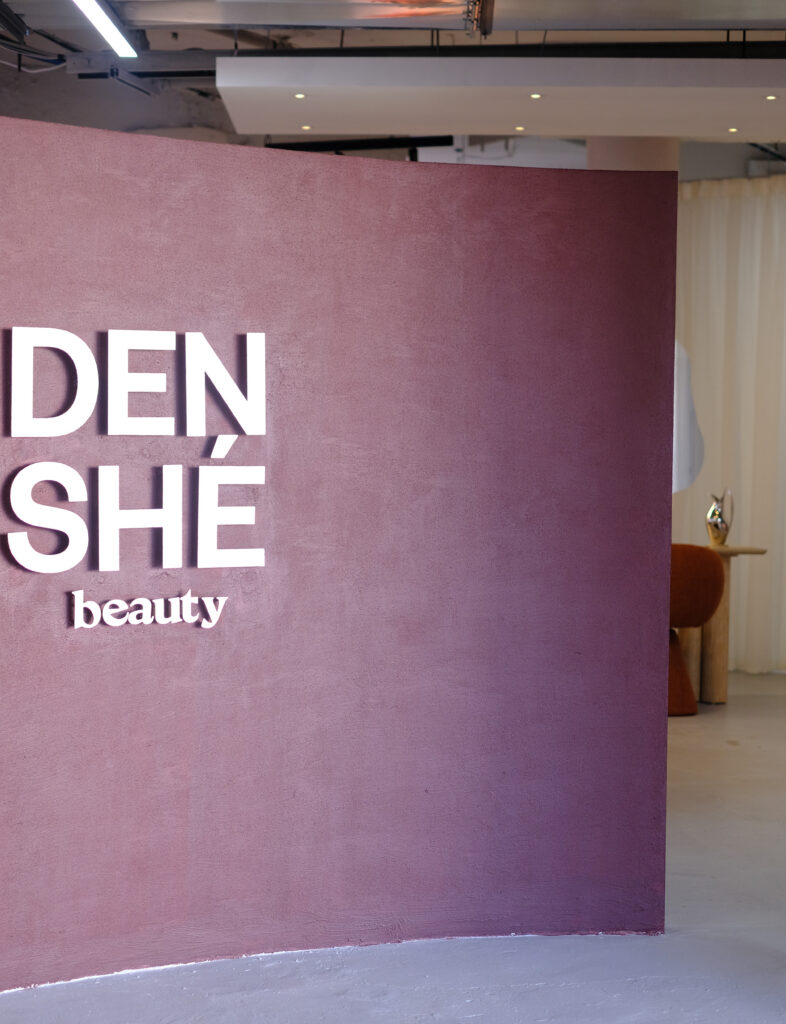
Denshé is a premium beauty house founded in 2026 and based at an atelier on Oxford Road in Illovo. It makes one product, the Signature Skin Foundation, and it makes it to order.
The brand was founded by Denise Mulenga-Ottesen, a commercial lawyer, together with Frederik Ottesen, a mechanical engineer and professional toolmaker. That pairing explains a lot about how the business is built, because the centrepiece is not a formula so much as a machine.
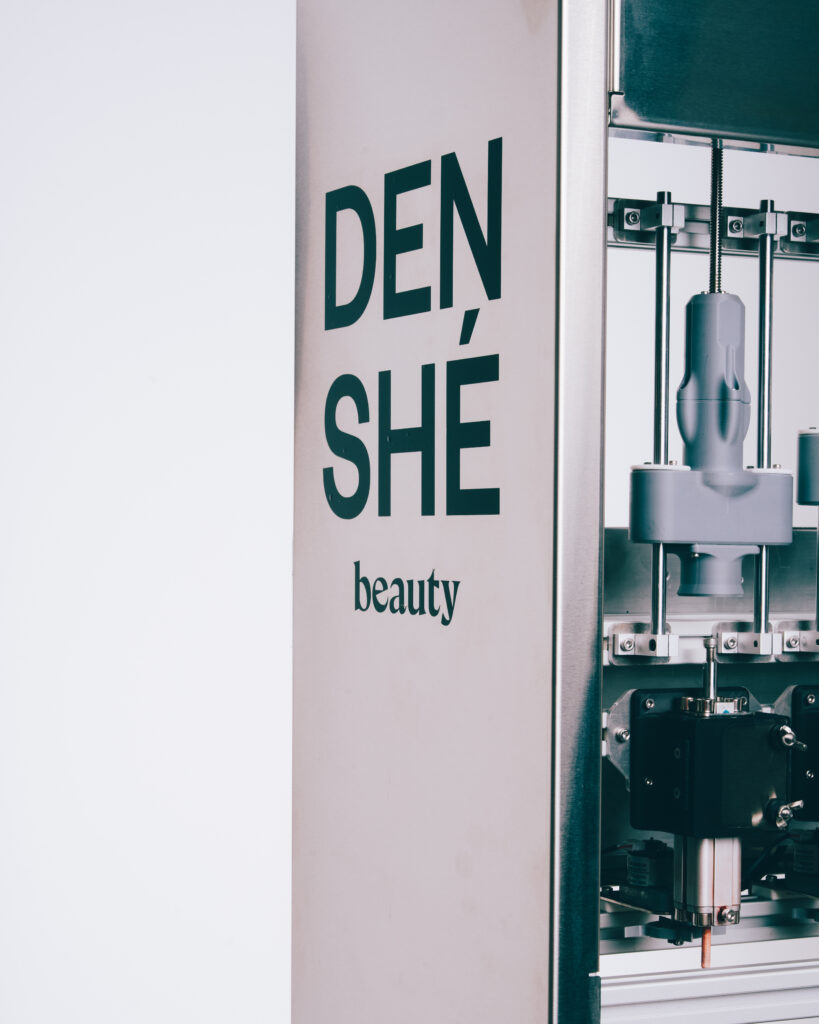
The Denshé Matchmaker is the brand’s in house customisation system, developed by Ottesen. It is a five channel dispensing system that measures and releases pigment to within a hundredth of a gram. A guest’s skin reading runs through it, and out the other side comes a single bottle of foundation calibrated to a single face.
Every formula made is recorded and stored, which means a returning guest can have hers reproduced to the same hundredth of a gram. It also means the brand is quietly building something it calls the Archive of Skin, a growing database of shades mapped across the skin spectrum.

How it is changing the beauty space
To understand why this matters, it helps to remember how recently the industry accepted that its shade ranges were a problem at all.
When Fenty Beauty launched in 2017 with 40 foundation shades, it exposed a gap the category had lived with comfortably for decades. The commercial response was immediate, and the phrase “the Fenty effect” entered the industry vocabulary as brand after brand extended its range. Deeper shades became standard. Undertone language became mainstream. It was real progress, and South African shoppers felt it, with Fenty now stocked locally through retailers including Edgars and ARC.
But a wider shelf is still a shelf, and that is precisely the argument Denshé is making.
“We built the opposite,” says Mulenga-Ottesen. “Nothing is made until we measure you, so we are not finding your closest match, we are making your only one. Every woman deserves to be met precisely, not approximately.”

Mulenga-Ottesen
Custom blending itself is not brand new. Prescriptives built a cult following on counter blended foundation before discontinuing the service, and Lancôme’s Le Teint Particulier machine put bespoke shade mixing into American department stores. What has been missing is a version of this built from the ground up around the skin the shade range historically served worst.
That is the meaningful shift here. Denshé says its archive begins with the global majority, the deeper and more complex skin tones that shade ranges have consistently treated as the edge case rather than the centre. But because nothing is premixed, the system has no centre and no edge at all. It simply formulates for whoever is in the room.
There is also a business argument buried in the model. A shade range gets less accurate the further you travel from the skin it was designed around. This system gets more accurate the more people it serves, because every formula made deepens the archive and each match starts nearer the mark than the last.
“We are pan-African and global by design,” Mulenga-Ottesen says. “A shelf stays where it is put. A system travels.”
The Denshé Ritual: what actually happens
The experience runs across two appointments on two separate days, which makes it closer to a fitting with a tailor than a stop at a beauty counter.
The Shade Consultation is complimentary and unhurried, with one shade specialist attending to one guest. It opens with a conversation and moves into the reading, where skin tone and undertone are measured at several points across the face, neck and décolletage. The reasoning is straightforward: skin is never one flat colour, and a match taken from a single swatch on the jaw will miss.
From those readings, the specialist draws a benchmark shade from the Archive of Skin and applies it so the guest can feel the texture, finish and wear on her own skin before committing.
Denshé compares this to the plain calico version an atelier pins together before cutting a dress. It is a guide, not the garment. The brand is candid that the benchmark is often the closest match a guest has ever seen, and that the small distance between that and her actual skin is the entire point of the exercise.
The Shade Fitting is the second visit, when she meets her own formula for the first time. It is matched once and held, and measured again only if her skin changes.
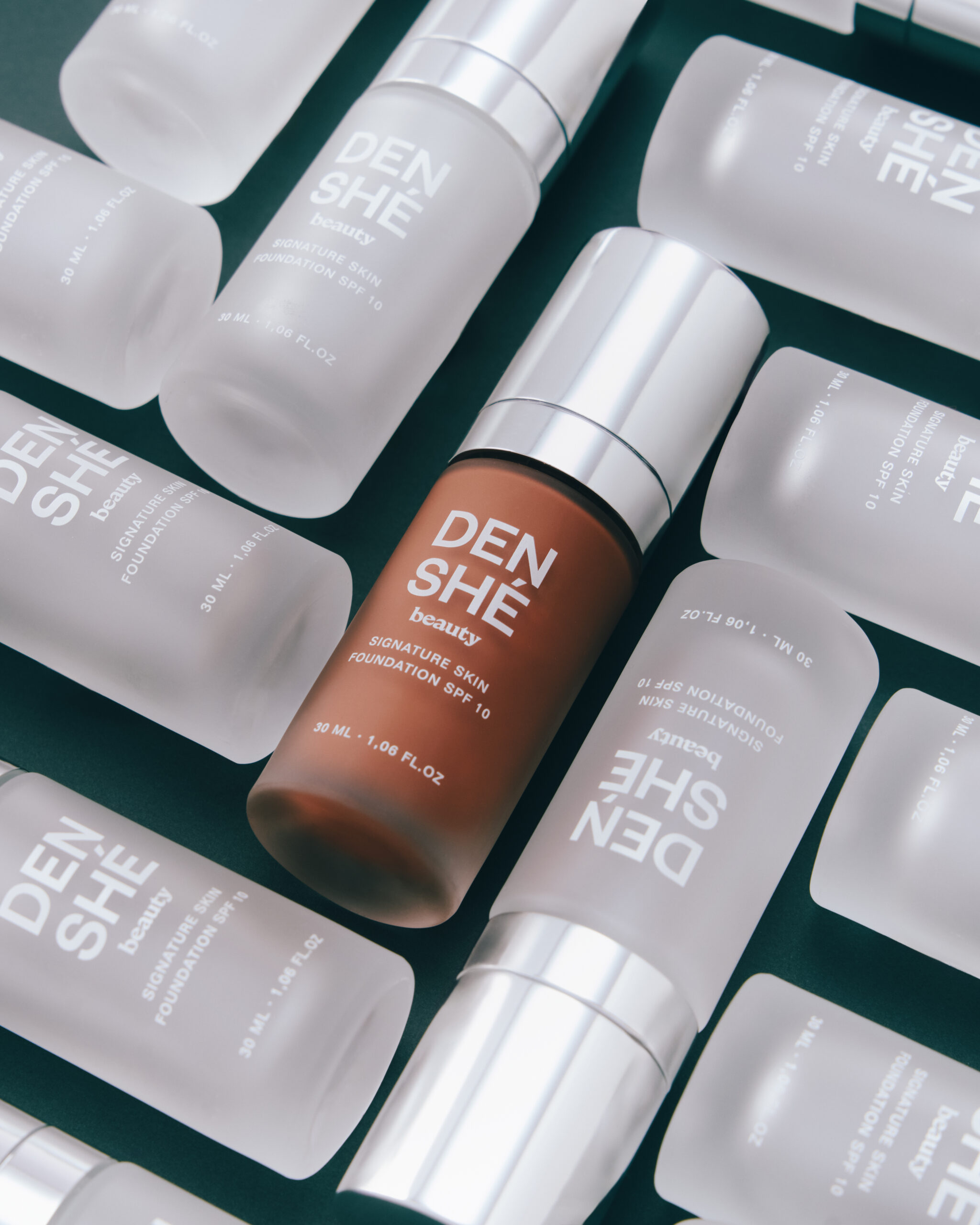
The Signature Skin Foundation itself is made in Italy. It is a soft matte with natural radiance, lightweight and breathable, buildable from medium to full coverage, with SPF 10, presented in a frosted glass bottle with an aluminium coated pump and cap.
One practical note for readers: SPF 10 is light incidental protection, not a substitute for daily sunscreen. In South African sun, this is a foundation to layer over your SPF rather than instead of it.
Why this lands the way it does in South Africa
Foundation is a strange product to be emotional about until you have spent years not finding yours.
For a large share of South African consumers, the shade range has never been a neutral piece of retail infrastructure. It has been a running negotiation, and often a quiet message about who a product was designed with in mind. Anyone who has been offered the darkest shade in a range and watched it go grey, or hunted three shops for the one bottle that vaguely works, understands why “close enough” has never felt like a compliment.

Locating this in Johannesburg rather than importing it as a foreign luxury service also matters. Beauty on the continent is still too often positioned as a market to be expanded into rather than a market that builds its own systems. Denshé is not adapting an existing product for African skin. It is designing the process around it and then arguing that process works everywhere, which is a notably confident inversion of how these conversations usually go.
Whether it scales is the open question, and an honest one. Made to measure has always been constrained by the room it happens in, and by price. Denshé has not disclosed what the Signature Skin Foundation costs, though the consultation is free, so the accessibility question stays genuinely unanswered for now. The brand’s response is that the archive is what travels, not the atelier, and the system improves rather than strains as more people use it.
For the guest standing in Illovo, though, the promise is much smaller than the engineering behind it. After years of being sold the nearest available version of herself, she gets the actual one.
Visit Denshé Beauty
The Denshé Atelier is at 204 Oxford Road, Illovo, Johannesburg. It is open Monday to Friday from 10:00 to 18:00, Saturday from 10:00 to 16:00 and Sunday from 10:00 to 14:00. The Shade Consultation is complimentary and bookings can be made at denshebeauty.com/book.